Two cases, one topic – AI is changing our digital reality
In the last few days we have experienced two situations that clearly show how much artificial intelligence is already shaping the digital environment of course providers - both positively and negatively.
One prospective customer enthusiastically reported that we appeared at the top of an AI search when he was looking for a suitable one online booking system searched. A real highlight - and clear proof that our work on SEO, GEO (Generative Engine Optimization) and structured content is having an impact.
Shortly afterwards, a customer got in touch and was surprised to find out internal documents of his course offerings appeared in an AI search. The cause was simple but momentous: a file was accidentally released as “public” instead of “internal”.
These two experiences illustrate the new reality in the digital space:
AI offers enormous opportunities for visibility - but also requires careful handling of data.
In this article we show how AI searches work, why internal documents can become visible and how you can ensure in just a few steps that confidential content remains protected - without sacrificing reach.
AI is changing search – and with it the visibility of course providers
Artificial intelligence has long been part of everyday life. Platforms like ChatGPT, Google Gemini or Perplexity no longer just provide links, but also formulate answers directly from a variety of data sources.
For course providers this means:
Well-structured content becomes more visible – in search engines and in AI-generated answers.
Those who identify clear topics, describe content precisely and use relevant terms consistently are more likely to be included in these AI answers. In ours Blog "What is GEO?" We have described the topic in detail, so we will only give you a short review here:
Regularly maintained course descriptions and precise texts not only improve the classic SEO ranking, but also visibility in generative AI searches. Prefer AI systems consistent, structured, information-dense content.
What AI searches prefer
- clear structures
- clear themes
- neatly titled pages
- GEO relevant information
- high-quality texts
Many of our customers are already benefiting from this. Anyone who offers transparent services and easy-to-understand information will be visibly rewarded - in classic and generative searches.
Why internal documents can suddenly become visible
The downside of AI-based search:
Publicly accessible documents can be discovered and processed by search engines and other automated systems. However, they are not automatically indexed or used to train generative models.
Whether a document is collected depends, among other things, on links, sitemaps, crawler directives, access barriers and the provider concerned. Search indexes, caches, retrieval systems and training datasets are technically distinct processes. A public URL alone does not show whether or for what purpose the content was processed.
In practice, this often happens unintentionally. Typical causes are:
- incorrectly placed ones Visibility options
- old, forgotten files
- Quickly uploaded documents without access restrictions
- Team members who don't know that a document is public
Tip from practice
An unlinked URL is not access control. It can become known through sharing, referrers, sitemaps or automated crawlers. Protect confidential documents with authentication and appropriate access permissions. Regularly check your sharing permissions in the edoobox online booking system – so internal content really stays internal.
How confidential content can be specifically protected
The good news: Data security in digital course management can be ensured with a few routines.
1. Mark internal content correctly
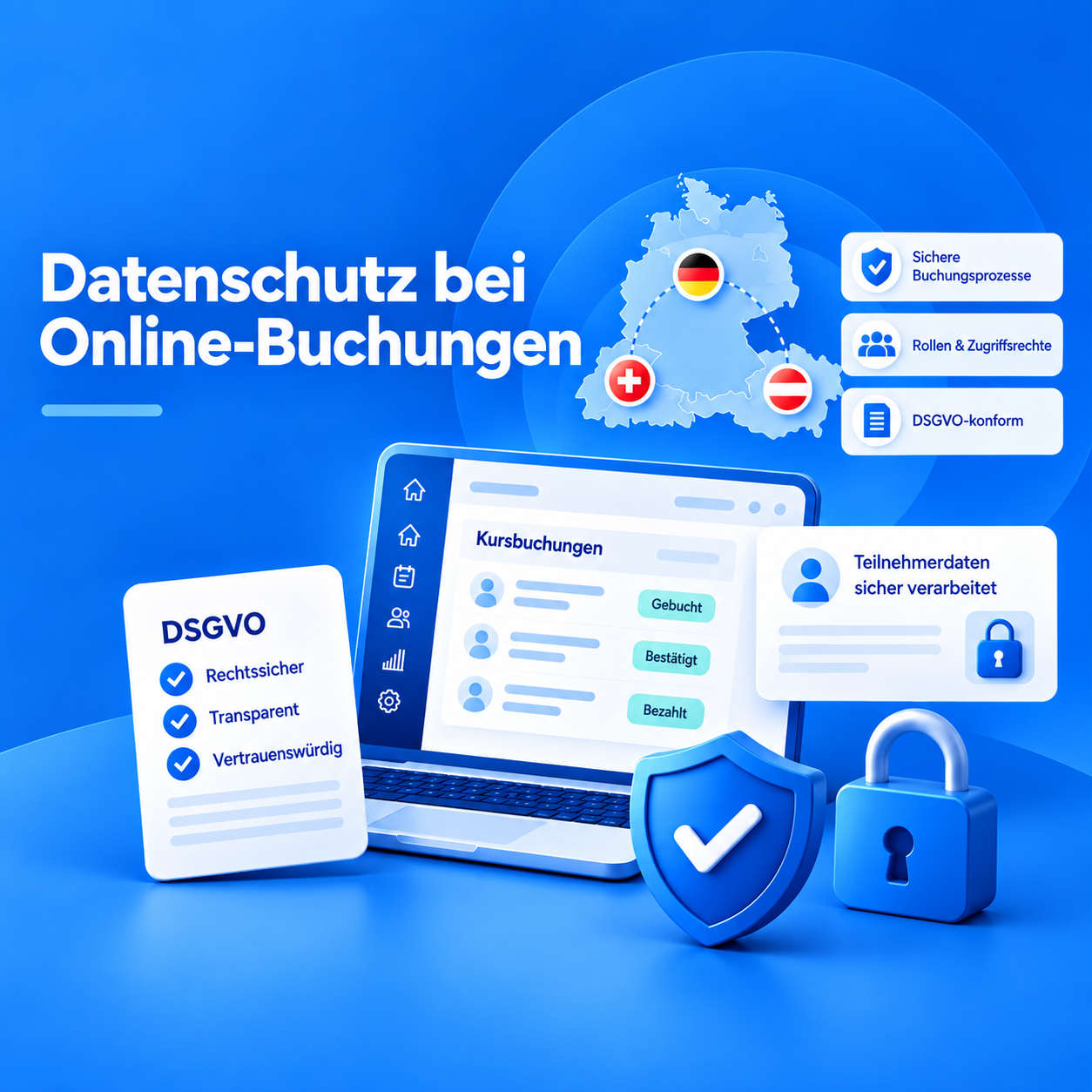
In edoobox You can clearly define who sees what content – publicly, for participants or internally.
This structure prevents sensitive files from accidentally becoming visible in AI searches.
2. Do not use open links for documents
Internal documents should never be shared via freely accessible URLs or embedded in public course descriptions.
3. Check roles and permissions regularly
Ensure that only authorized people have access to internal materials.
4. Introduce visibility checks
A short, recurring routine – about once a quarter – is enough to identify potential incorrect releases at an early stage.
Tip from practice
Create a small team checklist for your course administration. A regular look at the Visibility settings significantly reduces risks – and at the same time strengthens your GEO-compatible structure.
Which should never be public
Certain content generally does not belong on the open internet - neither for search engines nor for AI systems.
Materials that should always remain internal
- Course materials or scripts
- Presentations
- Internal price lists
- Participant lists or certificates
- Internal training materials
- Technical documents that are not intended for distribution
Tip from practice
Use for that internal exchange exclusively secured platforms like edoobox or your internal team tool. In this way, you not only prevent accidentally public documents, but at the same time strengthen the digital professionalism of your organization.
If internal documents have already become visible
Even if prevention is the best protection, in practice it may happen that a document was accidentally made public.
What you should do immediately
- Set visibility to “internal”.
- Change URL or re-upload file
- Check whether the file has been shared externally
- Control shares in external storage (e.g. Google Drive).
- Briefly inform the team that the error has been fixed
Important reality check
Removing the original file does not necessarily mean that copies immediately disappear from search indexes, caches, archives or third-party systems. Whether content was included in a training dataset or can be reproduced by a model cannot be inferred from its previous public accessibility alone.
Block access, change or remove the URL, and where appropriate request removal from indexes and caches from the relevant search or storage services. Reliable access controls before publication are the most important protection.
Tip from practice
Document the incident internally and communicate openly that it has been resolved. This transparency creates trust – both within the team and among your own course participants.
Share responsibility – for maximum safety
At edoobox We see ourselves as partners for our customers. We provide you with clear tools that allow you to clearly separate internal and external content - including secure hosting, precise role management and easy-to-understand Training.
At the same time, it is your responsibility to use these functions consciously. This includes:
- regular Visibility checks
- Training of employees
- careful handling internal documents
This combination not only protects knowledge, but also strengthens the digital perception of your offer.
Tip from practice
Well-structured course management appears professional on the outside – and secure on the inside. GEO-optimized content, clear descriptions and clean data management are the key to being positively perceived in AI searches.
Conclusion: AI offers opportunities – if we use them responsibly
Artificial intelligence is changing the way people search for offers: away from classic search results towards generative answers. This opens up great opportunities for course providers – greater reach, greater visibility and better positioning.
But these opportunities only unfold if sensitive data is handled carefully at the same time. Anyone who clearly structures their course content and consistently protects internal documents will find the perfect balance between Visibility and Security.
edoobox supports you in this: with clear tools, intelligent structure and a team that is at your side at all times.